


Application, Products
The Role of Wire Marking in Ensuring Electrical Safety Standards
Mar
Estimated reading time: 6 minutes
Key Takeaways
- Wire marking is crucial for electrical safety, ensuring clarity and compliance.
- Clear labels facilitate safe Lockout/Tagout (LOTO) procedures, preventing accidents during maintenance.
- Poor marking practices can lead to serious hazards, such as confusion between power and control circuits.
- To enhance safety, use standardized methods, mark both ends of wires, and choose durable materials.
- Emphasising wire marking showcases commitment to safety and compliance with electrical standards.
In the world of electrical work, safety is not just a priority; it is the foundation upon which every project is built. While circuit breakers, grounding, and proper insulation are often the first things that come to mind, there is a less obvious but equally critical component to a safe electrical system: clear and durable wire marking. Proper labeling is a fundamental requirement for meeting safety standards, preventing accidents, and ensuring long-term operational integrity.
An electrical panel that is not clearly marked is a significant liability. It creates a hazardous environment for anyone performing maintenance, troubleshooting, or upgrades. This article will explore the essential role of wire marking in upholding electrical safety standards, examine common issues arising from poor practices, and provide guidance on how to ensure your installations are safe, compliant, and professional.
Why Wire Marking is a Pillar of Electrical Safety
Effective wire marking is far more than an organisational tool. It is a vital communication system that provides instant clarity about the function and characteristics of every conductor within an installation. This clarity is directly tied to safety and compliance in several key areas.
Facilitating Safe Lockout/Tagout (LOTO) Procedures
Lockout/Tagout procedures are non-negotiable for ensuring worker safety during maintenance and servicing. These procedures require technicians to de-energise and lock equipment to prevent accidental startup. Proper wire and terminal identification is essential for LOTO to be effective.
Without clear labels, a technician cannot be 100% certain they have isolated the correct circuit. This uncertainty can lead to devastating accidents, including electric shock, arc flash incidents, or unexpected equipment activation. Accurately marked terminals and wires allow technicians to confidently identify the right breaker, switch, or fuse, ensuring the correct energy source is isolated before work begins.
Preventing Accidental Contact with Live Wires
In a complex control panel, bundles of wires can look identical. An unmarked wire is an unknown, and in electrical work, unknowns are dangerous. A technician attempting to diagnose a problem or add a new component might mistakenly cut or handle a live wire if it is not properly identified.
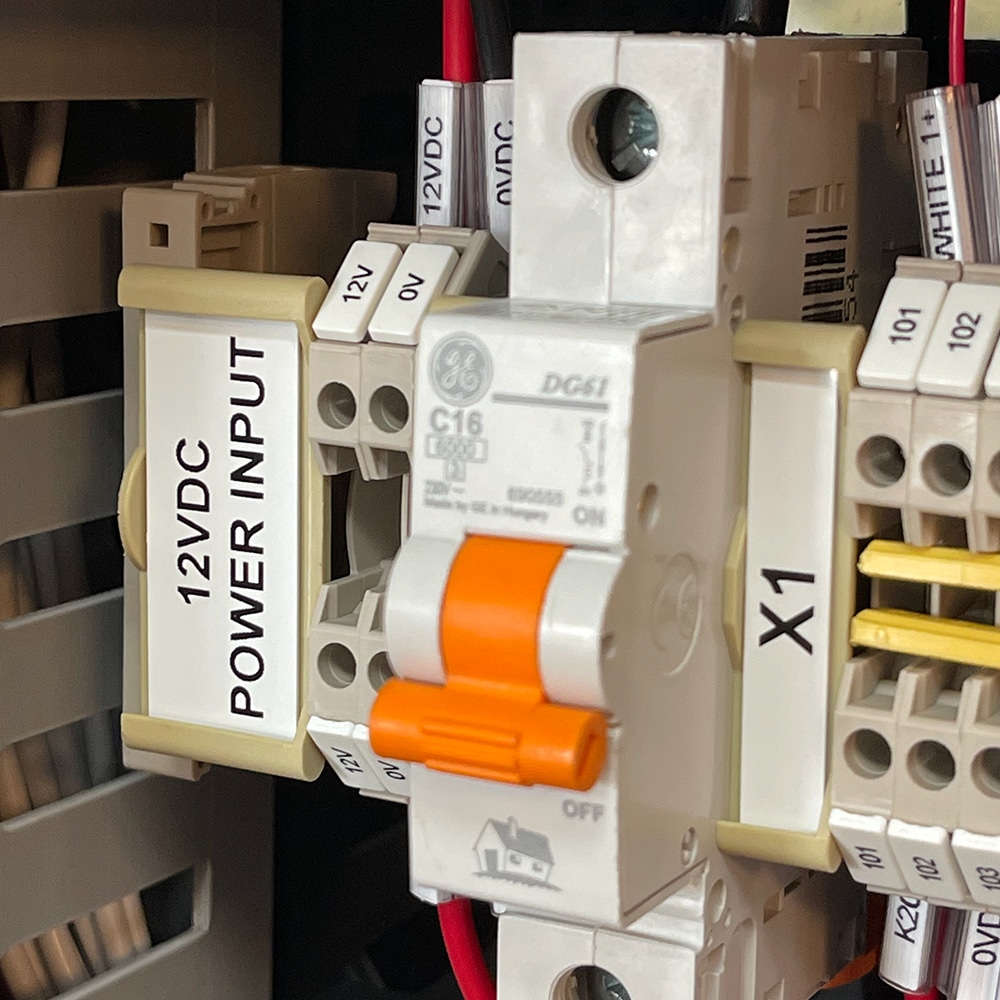
Clear marking provides immediate information about a wire’s purpose and status. For example, labels can indicate voltage levels, differentiate between AC and DC power, or identify control circuits versus high-power lines. This information allows personnel to take appropriate safety precautions and use the correct personal protective equipment (PPE), significantly reducing the risk of accidental contact with energised conductors.
Ensuring Compliance with Industry Standards
Regulatory bodies and standards organisations throughout Australia mandate clear and durable labeling for electrical systems. AS/NZS 3000 (Australian/New Zealand Wiring Rules) includes specific requirements for identifying conductors in electrical installations. AS/NZS 3439, which covers low-voltage switchgear and controlgear assemblies, requires that components and conductors in control panels be clearly marked to match their circuit diagrams and documentation.
Similarly, Safe Work Australia and state-based electrical safety regulators emphasise the importance of proper identification for safe work practices and electrical safety compliance. Electrical licensing authorities across Australian states and territories enforce these standards during inspections and audits. Failing to meet these requirements can result in failed inspections, non-compliance notices, costly rectification work, and legal liability in the event of an electrical accident. Proper wire marking is a straightforward way to demonstrate due diligence, satisfy electrical safety obligations, and ensure full compliance with Australian electrical standards.
Common Safety Issues from Poor Marking Practices
Neglecting wire marking or using substandard methods can introduce serious hazards into an electrical installation. These issues often remain hidden until a critical failure or an accident occurs.
Confusion Between Power and Control Circuits
One of the most dangerous scenarios is confusing a low-voltage control circuit with a high-voltage power circuit. Many control panels contain a mix of 24V DC control wires and 400V AC power wires running in close proximity. Without clear differentiation, a technician could mistakenly connect a low-voltage component to a high-voltage source, destroying the equipment and creating a significant arc flash or fire hazard.
Mitigation: Use a consistent color-coding scheme in conjunction with clear labels. More importantly, use a marking system that explicitly states the voltage and function of each wire. A label reading “PUMP-1 400VAC” leaves no room for doubt.
Misidentification During Emergency Situations
During an emergency, such as an equipment malfunction or fire, speed is critical. First responders or maintenance personnel need to shut down power quickly and safely. An unmarked or poorly marked panel dramatically slows down this process. Having to trace wires or consult confusing diagrams in a high-stress situation increases the risk of error and prolongs the danger.
Mitigation: Ensure that all main disconnects, breakers, and critical control circuits are clearly and logically labeled. The marking system should be intuitive, allowing someone with little prior knowledge of the system to safely de-energise it by following clear, visible labels.
Long-Term Degradation of Labels
A label is only useful if it remains legible for the life of the equipment. Using handwritten markers on electrical tape or cheap paper labels is a common but flawed practice. Over time, these labels will fade from UV exposure, smear from contact with oil or solvents, or peel off due to heat and humidity. An illegible label is no better than no label at all.
Mitigation: Invest in a professional-grade wire marking system designed for industrial environments. Systems like Grafoplast®, which use durable, manual or thermally printed markers protected by a transparent sleeve, ensure permanent legibility. The sleeve shields the marking from abrasion, moisture, and chemicals, guaranteeing it will remain clear and readable for decades.
Best Practices for Safe and Compliant Wire Marking
Implementing a robust marking strategy is straightforward. By adhering to a few key principles, you can significantly enhance the safety and professionalism of your work.
- Standardise Your System: Before starting a project, establish a consistent labeling convention. This document should define abbreviations, numbering sequences, and the format for all labels. A consistent system ensures that anyone working on the panel can understand it.
- Mark Both Ends: Always label every wire and cable at both its source and destination. This simple practice eliminates guesswork and dramatically speeds up tracing and troubleshooting.
- Choose the Right Materials: Select marking materials rated for the environment. Consider factors like temperature, chemical exposure, and UV light. Using a high-quality system with protective sleeves is the best way to ensure long-term durability.
- Prioritise Legibility: Use high-contrast colors (e.g., black on white or yellow) and a clear, simple font. Ensure the text is large enough to be read from a typical working distance. Portable thermal printers like the EVOMAX can produce highly legible and durable tags on demand.
- Integrate with Documentation: Ensure that the labels on the wires correspond exactly to the electrical schematics. This synchronicity is crucial for efficient commissioning, troubleshooting, and future modifications.
Conclusion
The role of wire marking in electrical safety cannot be overstated. It is a practice that directly impacts a technician’s ability to work safely, a company’s ability to meet regulatory standards, and the overall reliability of an electrical system. By moving away from ad-hoc, unreliable methods and embracing professional, durable marking systems, you are making a direct investment in safety.
Clear and permanent labels transform a potentially hazardous collection of wires into a logical, understandable, and safe system. For electricians, contractors, and compliance officers, making excellent wire marking a non-negotiable part of every project is one of the most effective ways to protect people, property, and professional reputations.
 Accessories & Tools
 Adhesive, Channel & Clip-in Markers
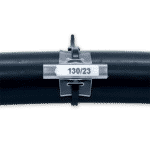 Cable Tie Sleeves
 Kits
Kits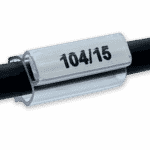 Slide-On Sleeves
 Snap-On Sleeves 300 Series
 Spark Crimp-On Pins & Terminals
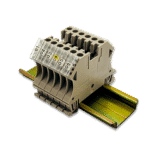 Terminal, Relay and Contactor Markers